Home › Sitework and Structural Concrete
We provide sitework and structural concrete services in Fayetteville, NC for commercial and industrial projects. This includes equipment pads, retaining walls, piers, pedestals, and structural slabs. Our team coordinates with other trades to keep critical path work on schedule. Rely on us for carefully built structural concrete footings and walls that meet project specs.
Superior Concrete Fayetteville provides professional structural concrete throughout Fayetteville, NC, North Carolina and the surrounding area. Our licensed, insured crew delivers safe, clean, on-time work with a free estimate before anything begins. Call (910) 387-1298 or request your free quote.
Sitework and structural concrete that actually fits Fayetteville soil and codes
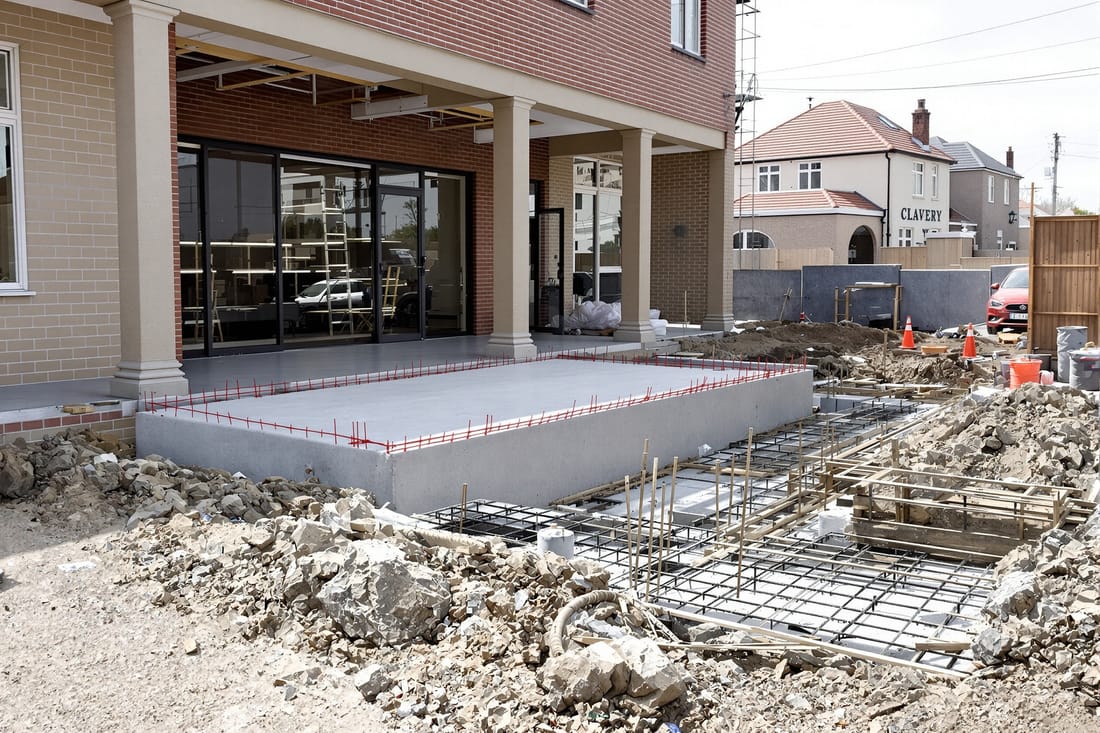
Superior Concrete Fayetteville handles sitework and structural concrete as one coordinated package so the dirt work, drainage, and concrete structure all function together. In Cumberland County we see sandy loam, clay pockets, and areas with a high water table, sometimes all on the same lot. If the site is not graded correctly or the subgrade is not compacted to the right density, even perfectly placed concrete can crack, tilt, or settle.
For local commercial and residential projects, our crews start with a site walk to look at access for trucks, existing grades, tree roots, and where water naturally moves during heavy storms. We match that to plan sets and Fayetteville and North Carolina building code requirements for structural concrete, including footing sizes, slab thickness, and reinforcement. Because we do both sitework and concrete, we can often save a client money by adjusting cut and fill on site so less imported stone or hauled-off spoil is needed, while still keeping structural elevations correct.
The result is a concrete structure that is not just strong on paper, but actually supported by properly prepared soil, drainage, and base that match how this region behaves under rain, heat, and occasional freeze.
What the sitework phase really includes
Sitework is more than just knocking dirt around with a skid steer. On a typical project in Fayetteville, Superior Concrete Fayetteville breaks it down into clearing, rough grading, utility coordination, fine grading, and proof-rolling or compaction testing.
Clearing includes removing trees, stumps, brush, and old pavements. We make sure roots are taken out beneath future slab and footing areas so they do not rot and create voids. Rough grading uses laser or GPS to bring the site within a few inches of design elevations, shaping slopes so water runs away from the future building pad or parking area, not toward it.
Before we pour structural concrete, we coordinate with plumbers, electricians, and utility providers so underground lines are in place and inspected. Once that is complete, we perform fine grading and install stone base where required. In many Fayetteville projects, we recommend a compacted stone layer under structural slabs in garages, warehouses, and commercial spaces to help with drainage and to create a more uniform platform.
Compaction is verified with either proof-rolling for smaller jobs or density testing for larger or engineered projects. This step is critical on our area’s looser soils. Proper compaction greatly reduces future settlement, which in turn protects structural concrete elements like grade beams, footings, and thickened slab edges.
How we build structural concrete that holds up over time
Structural concrete work at Superior Concrete Fayetteville includes footings, foundation walls, grade beams, structural slabs, columns, and load-bearing elements for both residential and commercial projects. The process starts with layout. We use string lines, lasers, and control points tied to the site benchmark so that footing locations, column pads, and slab elevations line up with the building plans and meet North Carolina code.
Formwork is then built to match the engineer’s details, with attention to proper footing width and depth. In this region, footing depth is selected to meet frost requirements and to reach stable soil. Rebar is placed and tied per the structural drawings. We pay close attention to lap lengths, bar spacing, and clear cover to protect steel from corrosion, which is important in our humid climate.
For mixes, we typically use a 3,000 to 4,000 psi design strength for structural elements, adjusted based on engineer specs. We consider exposure to de-icing salts in parking areas, forklift traffic in warehouses, or heavy vehicle loading in drive aisles when choosing mix design, aggregates, and any admixtures. Concrete is placed with chutes, pump trucks, or buggies depending on access, and then consolidated with vibrators in thicker sections and around rebar to eliminate voids.
We control joints and curing so that the concrete achieves its design strength and remains stable. On structural slabs we cut or form control joints to manage shrinkage cracking and use curing compounds or wet curing methods as the weather requires. In our hot summers, we may pour earlier in the morning and use set-control admixtures to keep the concrete workable and reduce the risk of surface cracking.
Cost factors Fayetteville property owners should understand
Clients often want to know why one sitework and structural concrete quote is higher than another. For our projects around Fayetteville, the main cost drivers are site access, soil conditions, excavation depth, reinforcement needs, and thickness or size of structural elements.
If trucks cannot get close, we may need pump trucks or extra labor with buggies, and that adds cost. Poor soils or organics that must be removed and replaced with compacted stone or structural fill also increase budget, but skipping that step usually leads to expensive repairs later. Deeper footings, thicker slabs, and heavier rebar cages are common on buildings that support masonry or steel, or that will carry heavy equipment or storage racks.
Another factor is groundwater. In parts of Fayetteville with a higher water table, we might need temporary dewatering, underdrains, or additional stone to keep trenches and footing excavations stable and dry. That is something a local contractor like Superior Concrete Fayetteville can typically spot early, which allows more accurate pricing.
Permitting, inspections, and testing also affect schedule and cost. Structural concrete often requires rebar inspections and sometimes third-party testing. We build that into our planning so there are fewer surprises for the owner or GC during construction.
Common structural concrete problems and how we prevent them
Most structural concrete issues we see in Fayetteville trace back to poor subgrade preparation, inadequate drainage, or missing steel. Settlement cracks, tilting slabs, and water seeping into basements or crawlspaces usually show that the groundwork was not done correctly or that water was not managed.
Superior Concrete Fayetteville addresses this by combining careful sitework with conservative structural practices. We do not pour over soft spots, standing water, or mud. If we encounter unexpected conditions like buried debris or saturated soils, we fix the problem before placing concrete, even if that means undercutting and replacing material or adding geotextile and stone.
Rebar placement is another area where shortcuts cause failures. We keep steel supported on chairs so it stays in the correct position during the pour instead of ending up on the bottom where it does little good. Anchor bolts, column dowels, and embeds are set from templates and checked against plans before concrete is placed.
Drainage is built into the design whenever possible. For example, we slope exterior structural slabs slightly away from buildings, include thickened edges with rebar where vehicles or dumpsters will bear, and coordinate perimeter drains or sump pits when required by the engineer. These steps are specific to our local climate and rainfall patterns and they reduce moisture-related issues over the life of the structure.
What to know before you hire a structural concrete contractor
Before you hire anyone for sitework and structural concrete in Fayetteville, ask how they plan to handle soils testing or verification, how they coordinate with engineers, and who is responsible for calling in inspections. A contractor that treats structural work like a standard driveway job is taking unnecessary risks with your building.
Superior Concrete Fayetteville reviews structural plans carefully, confirms design loads, and clarifies any conflicts or missing details with the engineer of record before work starts. We provide submittals for mix designs and reinforcement when required, and we schedule inspections to match municipal and North Carolina state requirements. On projects without a full engineering team, we still apply the same structural mindset, with attention to reinforcement, thickness, and support conditions.
You should also verify that the contractor has experience with both sitework and structural concrete, carries appropriate insurance, and is familiar with local inspectors and code officials. Local knowledge matters here, because understanding how Fayetteville soils behave and how our permitting offices operate can keep your project moving rather than sitting idle waiting on corrections.
If you want a sitework and structural concrete package that can actually support the building, equipment, and traffic you are planning for, and that is tailored to this specific area of North Carolina, Superior Concrete Fayetteville is set up to do that from the ground up.