Home › Commercial Concrete Contractor Services
Our commercial concrete contractor services in Fayetteville, NC support retail, industrial, and office projects. We handle slabs, foundations, parking areas, and site concrete with attention to specs and schedules. General contractors rely on us for clear communication and organized crews. Partner with a commercial concrete team focused on safety and quality results.
Superior Concrete Fayetteville provides professional concrete contractor throughout Fayetteville, NC, North Carolina and the surrounding area. Our licensed, insured crew delivers safe, clean, on-time work with a free estimate before anything begins. Call (910) 387-1298 or request your free quote.
Commercial Concrete Built For Fayetteville Businesses
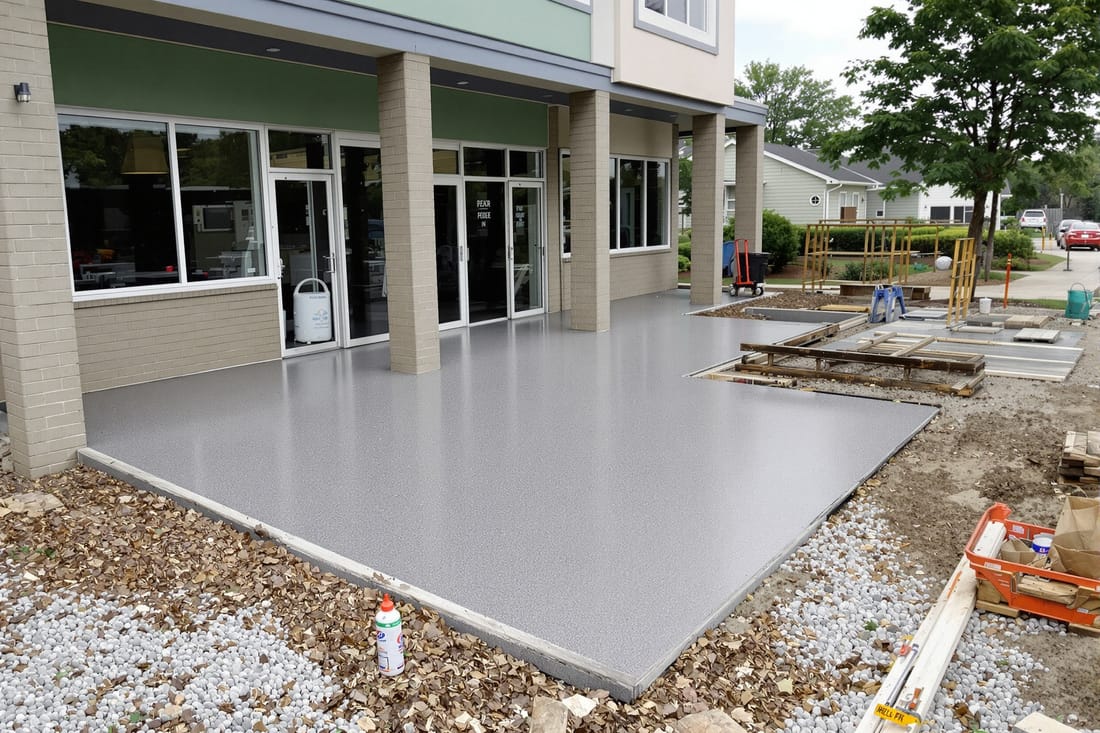
Commercial concrete in Fayetteville is all about taking real traffic loads, coping with our hot, humid summers, and getting projects finished without shutting down your operation longer than needed. Superior Concrete Fayetteville focuses on concrete work for retail centers, warehouses, industrial sites, offices, schools, and multi-family properties across Cumberland County.
Before we quote anything, we walk the site with you. We look at access for trucks and pumps, drainage patterns, existing utilities, and how your business operates during the day. For example, a busy Bragg Boulevard retail pad might need night or early-morning pours so customers can park by opening time. A distribution warehouse off I-95 might need a thicker slab and specialty joints to handle forklifts and pallet racking.
We match the mix design and reinforcement to the use. That means looking at axle loads on drive lanes, saturated soils after a Fayetteville thunderstorm, and the freeze-thaw swings we get in the winter. Our crews do layout, forms, rebar or wire mesh placement, concrete placement, finishing, curing, and final joint cutting with a clear schedule so property managers are never guessing what happens next.
Types of Commercial Concrete Projects We Handle
Superior Concrete Fayetteville delivers a focused range of commercial concrete services so we can do each one very well instead of trying to do everything.
Common projects include:
• Parking lots and drive lanes: Thickness, slope, and joint layout are designed for expected traffic. For example, we typically recommend 5 to 6 inch slabs for standard vehicle parking and thicker sections or reinforced pavement where delivery trucks turn or stop.
• Loading docks and aprons: These see concentrated loads and frequent impact from trailers. We often specify higher strength mixes, closer joint spacing, dowel baskets at key joints, and careful compaction of the base to prevent slab pumping and settlement.
• Dumpster pads and service areas: Trash trucks are heavy and turn sharply. We install thicker reinforced pads, usually with continuous rebar grids tied into curbs or bollards, to stop edge cracking and rutting.
• Warehouse and shop floors: Flatness and levelness are crucial for racking and equipment. We use laser screeds when appropriate, control joint patterns for forklift traffic, and consult on hardeners or sealers that suit your operations.
• Sidewalks, ADA ramps, and curbs: We follow current ADA slope and handrail guidelines, keep cross slopes in check for drainage without creating trip points, and coordinate curb cuts with city and NCDOT requirements where public access is involved.
How the Commercial Concrete Process Really Works
A smooth commercial concrete job is mostly about planning and coordination. Here is how Superior Concrete Fayetteville typically runs a project so you know what to expect.
1. Site evaluation and design input: We review your plans or, if they are not final, we help your engineer or architect refine thicknesses, reinforcement types, and joint spacing to match local soil and load conditions. On some smaller jobs, we can provide a practical design based on accepted industry standards.
2. Scheduling around operations: For active businesses, we phase work so you can keep operating. This could mean working on every other parking bay, using temporary signage and cones, or scheduling night and weekend pours in downtown Fayetteville or near busy corridors like Raeford Road.
3. Subgrade and base preparation: Most long term problems start under the slab. We strip unsuitable soils, proof roll to identify soft spots, and compact stone base to the specified density. For areas that stay wet, we may recommend geotextile fabric or thicker stone to spread the load.
4. Forms and reinforcement: We set forms to the correct elevations for drainage. Then we install rebar, wire mesh, dowels, and any embedded items like bollard sleeves or conduit. We chair steel so it stays in the middle of the slab during the pour instead of sinking to the bottom.
5. Placing and finishing concrete: We order concrete mixes suited for the day’s temperature and the job type. In hot Fayetteville summers, this can mean retarding admixtures or tighter coordination with the batch plant to avoid rapid set. We place concrete, consolidate it properly, and apply the specified finish, such as broom for parking lots or smooth trowel for interior floors.
6. Curing, cutting joints, and protection: Proper curing matters as much as the pour. We apply curing compound or use wet curing methods, then saw control joints at the right time to control cracking. Finally, we barricade fresh concrete, coordinate striping where needed, and give you realistic timelines on when different traffic types are safe.
What Drives Cost For Commercial Concrete In Fayetteville
Concrete pricing can look simple, but several technical factors change the real cost and performance. When Superior Concrete Fayetteville prepares a proposal, we walk you through the specific cost drivers so you can decide where to invest and where to save.
Key factors include:
• Thickness and reinforcement: A 4 inch light duty slab with wire mesh is far cheaper than an 8 inch slab with rebar and dowel baskets, but if your site gets frequent truck traffic, going too thin will cost more in patches and downtime later.
• Subgrade conditions: Soft or saturated soils in low-lying parts of Fayetteville often need undercutting, additional stone, or stabilization. This adds upfront cost but avoids cracked and settled panels a few years down the road.
• Access and phasing: Tight sites, downtown locations, or facilities that must stay open may require smaller pours, more labor for traffic control, or pump trucks when we cannot back a mixer to the forms.
• Finishes and treatments: Basic broom or trowel finishes are budget friendly. Slip resistant finishes, color, hardeners, sealers, or decorative scoring for storefronts and office plazas add cost but can significantly improve appearance and durability in public facing areas.
• Time of year and timing: Summer work may require additional crew to handle faster set times and more attention to curing. Winter pours often need blankets or accelerators to meet strength targets. Working at night or weekends costs more but might be worth it if you need your parking or dock fully open during business hours.
Preventing And Fixing Common Commercial Concrete Problems
Most commercial concrete problems in Fayetteville, like random cracking, settlement, and surface scaling, are preventable with the right prep, mix, and curing. Superior Concrete Fayetteville has seen enough failed slabs to know what actually works in our climate.
To reduce random cracking, we design and cut control joints at proper spacing and depth and use adequate reinforcement where loads are high or slabs are odd shaped. For settlement issues, we take soil compaction and drainage seriously instead of just pouring thicker concrete and hoping it holds.
Surface scaling and spalling are common where deicing salts or standing water sit on the slab. We specify air entrained mixes when needed, finish at the right time (not overworking bleed water into the surface), and insist on proper curing. For loading docks and aprons, we often recommend surface hardeners or sealers to protect against impact and chemicals.
If you already have failing concrete, we will assess whether sectional replacement, partial depth repairs, or a full tear out is the better investment. We look at the slab thickness, base condition, and what your operations demand. Sometimes replacing the worst panels and improving drainage will buy years of life. Other times, especially with chronically pumping or heaving slabs, a full reconstruction with proper base prep is the only solution that makes financial sense over the long term.
Local Scheduling, Compliance, And Coordination
Commercial projects in Fayetteville have to fit into local rules, weather patterns, and client schedules. Superior Concrete Fayetteville is set up for that. We coordinate with city inspectors, local engineers, and utility providers so you do not get caught in paperwork or surprises.
We pay attention to season and time of day. In late spring through early fall, we often pour early morning to beat the highest heat and reduce plastic shrinkage cracking. In cooler months, we watch overnight lows and set up curing blankets or use accelerating admixtures to keep your schedule on track without sacrificing strength.
On public or shared access sites, such as shopping centers and medical offices, we coordinate with striping contractors, landscapers, and signage vendors so the whole site comes together cleanly. If your project is part of a larger build with a general contractor, we attend coordination meetings, provide pour schedules, and communicate clearly about site readiness so you are not paying trades to sit and wait.
Before we leave, we give you simple, site specific care instructions, including realistic timelines for foot, vehicle, and heavy truck traffic, recommended sealing intervals if applicable, and what to watch for in the first year as the concrete goes through its first full Fayetteville weather cycle.